To check whether raw-milk cheese meets Spain’s rules, confirm three points: the dairy is registered with the relevant regional health authority, its label and records provide full batch traceability, and microbiological controls support safe production. Spain has no universal 60-day ageing rule; compliance depends on hygiene, testing, labelling and official controls.
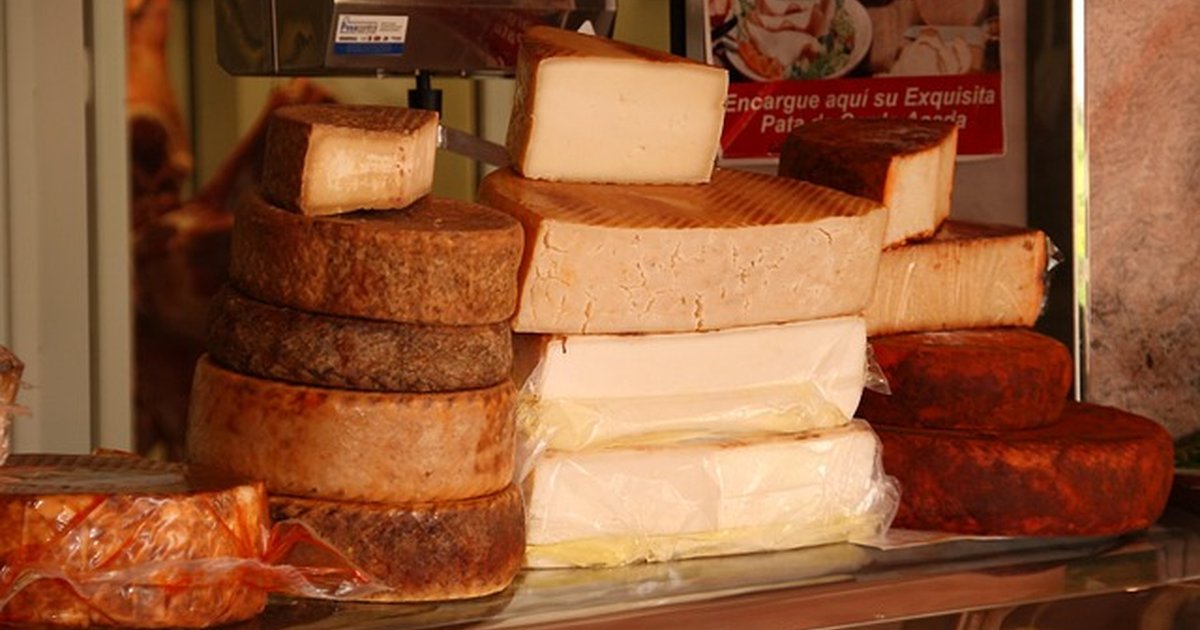
Many travellers and food lovers wonder whether a rustic queso bought at a mercado is legally made from raw milk. The three checks below help verify legality before buying, visiting or selling.
Tourists, foodies and small-scale producers face unclear rules, different lab tests and record duties when they decide to buy, visit or sell. Clear and practical checks remove the guesswork and make obligations easier to follow.
Resumen del proceso
This section lists the steps a small producer follows to sell legal raw milk cheese in Spain. Read each step and use the templates below.
- Register the business and notify regional authorities.
- Set a simplified HACCP and record critical points.
- Keep lot logs and supplier declarations for each milk batch.
- Run microbiological testing and archive lab reports.
- Label products with batch ID, origin and storage instructions.
- Follow channel rules for farm shop, vending or markets.
RegisterNotify MAPA and regional health authority
HACCPOne-page control plan for small makers
TraceabilityLot logs, supplier forms
TestingListeria, Salmonella, coliforms
LabelBatch ID, species, storage
A practical step-by-step compliance checklist helps a small raw-milk cheese producer. The checklist below gives concrete tasks and records to keep.
- MAPA registration and regional notification: file the facility plan, obtain establishment code and keep MAPA registration proof.
- One-page HACCP for small dairies: list critical points (milk reception temperature, pasteuriser validation or maturation control, salt/brine control, packaging date) and keep a signed daily verification line.
- Traceability lot logs: for each batch keep batch_id, milk_date, supplier name and herd_id, milk volume, initial tests and lab_ref, maturation_start/end, pack_date, distributor/point-of-sale and lot notes.
A simple folder with these records avoids confusion during inspections.
- Supplier declarations and animal health: signed supplier form with herd ID and recent brucellosis status.
- Microbiological testing schedule: baseline per-batch testing for new products (Listeria monocytogenes testing, Salmonella spp., generic E. coli). After three clean batches, change frequency to monthly or every 5–10 batches depending on volume and risk.
- Records retention and accessibility: keep current quarter of lot files immediately accessible for an inspection and archive full batch files and lab reports by shelf-life plus national or regional rules.
- Labelling and lot stickers: batch ID, species, storage and establishment code clearly visible on every unit.
Step 1: registration and notifications
The producer registers the activity with MAPA and the Autonomous Community. Registration creates the food establishment code and starts official controls.
The producer keeps this code with the business papers.
Local registration steps
Register with the local health authority and MAPA online or in person. Producers present the facility plan, animal health records and the intended outlets.
The authority issues the establishment code and inspection schedule.
Which authorities check what
Regional health authorities inspect hygiene and labeling. MAPA handles national dairy rules and official controls.
AESAN provides technical guidance and public health alerts. AESAN
Royal Decree 640/2006 works alongside Regulation (EC) No 852/2004 and Regulation (EC) No 853/2004. Spanish cheese hygiene rules require both the horizontal duties of Reg. 852/2004 and the product rules of Reg. 853/2004.
RD 640/2006 transposes and implements these EU obligations at national level. It sets registration and establishment-code procedures for dairy businesses.
Producers should treat MAPA registration and community notifications as the national entry point that triggers EU official controls. Keep establishment code, MAPA registration proof and proof of notification together with batch files.
Step 2: hygiene, milk sourcing and simplified HACCP
The operator designs a simplified HACCP that fits a small dairy. The plan lists critical points such as milk reception, salting and packaging.
The plan stays short, visible and signed by the person in charge.
Critical control points to record
Record milk reception time, temperature and supplier declaration. Record salting, pressing and start of maturation per lot.
Record packaging date and person responsible.
Supplier and herd health paperwork
Obtain a signed supplier declaration for each milk batch. Keep herd vaccination and brucellosis testing records as vets indicate.
The lack of supplier paperwork often triggers inspections.
Step 3: microbiological testing and ageing rules
Regulation (EC) No 2073/2005 sets microbiological criteria for foodstuffs and applies to cheeses. The common pathogens to test are Listeria monocytogenes, Salmonella spp. and generic coliforms.
Producers archive results and attach them to the batch file.
The 60‑day ageing myth
The 60-day rule is not a universal legal safety guarantee for raw milk cheeses. Inspectors expect supporting microbiological data rather than an ageing claim alone.
The most frequent error at this point is treating 60 days as a legal exemption without tests.
Testing frequency and panels
Start with baseline testing per batch for new recipes. Test for Listeria, Salmonella and generic E. coli.
After three consecutive clean batches, reduce frequency to monthly or every 5–10 batches depending on volume. Engage a microbiologist to assess results and set a final schedule.
| Process |
Legal basis |
Typical tests |
Documentation needed |
| Pasteurization |
Reg. (EC) 852/2004, national rules |
Pasteurizer logs, temp charts |
Equipment validation, temp records |
| 60‑day ageing claim |
Used in practice; not blanket law |
Listeria, Salmonella, E. coli |
Maturation log, test reports, recipe control |
| Validated safety by design |
Reg. (EC) 2073/2005 and RD 640/2006 |
Targeted pathogen and indicator panels |
Validation report, lab accreditation |
Legal deadline: Royal Decree 640/2006 (2006) works with Regulation (EC) No 852/2004 and No 853/2004; producers must comply with both frameworks and keep documentary evidence for official controls.
Pasteurisation and the 60-day ageing pathway are not interchangeable legally or microbiologically. Reg. 852/2004 and 853/2004 set hygiene duties. Reg. 2073/2005 defines microbiological criteria.
For Listeria monocytogenes, Reg. 2073/2005 provides two approaches used across ready-to-eat foods. Manufacturers must either show absence in 25 g at market or show, by validation, that levels stay below the safety limit.
A 60-day ageing claim alone does not meet the legal test. Producers relying on ageing must document process validation and provide microbiological testing.
Pasteurisation is an established technological control. An ageing exception requires documented validation and regular microbiological testing to satisfy officials.
This guidance applies in most cases, but exceptions exist for specific regional rules.
Step 4: traceability, lot logs and labeling
Traceability is required for each lot and must show milk origin through to final sale. Each lot file must contain supplier declaration, test results, maturation days and dispatch note.
Labels must show batch ID and storage instructions.
Example lot log fields
Batch ID, milk reception date, supplier name, herd ID, milk volume, initial test results, maturation start and end, pack date, person in charge. Store batch traceability logs and routine production records for at least one year.
Keep microbiological test reports and validation documents for a period at least equal to the product's shelf-life plus one year. Some Autonomous Communities require longer retention.
Keep the most recent three months of lot files immediately accessible for inspections.
Sample label
text
Product: Queso [Name] (raw milk)
Batch: [YYYYMMDD-001]
Species: [Sheep/Cow/Goat]
Net weight: [g]
Storage: Keep refrigerated 2–8°C
Producer: [Name, Address, Establishment code]
Allergens: Milk
PDO: [If applicable]
Step 5: sales channels and practical obligations
Sales channel defines extra duties and inspection focus. Farm shops, vending, markets and wholesale require different paperwork and controls.
Tailor traceability and labeling to the channel used.
On-farm and farm shops
Farm shops must follow on-site storage rules and display batch information for buyers. Affineurs or maturation experts must have documented procedures when they handle the product.
Most guides mention this but do not cover small signage requirements. Include visible batch stickers.
Vending machines, markets and wholesale
Vending machines need cleaning logs and clear product labels accessible to buyers. Markets require temporary stall notification, cold chain proof and sale declarations.
Wholesale buyers often request certificate copies and batch IDs.
Practical templates and a simple HACCP
Small producers benefit from short, repeatable documents. Keep one-page HACCP, a lot spreadsheet and a supplier declaration in the working folder.
Have a vet or microbiologist sign annual validation.
One-page HACCP model
Critical point 1: Milk reception. Control: temperature ≤8°C on arrival. Action: reject milk if temperature is above 8°C.
Record: temperature and signature.
Critical point 2: Maturation. Control: humidity and temperature range per recipe. Action: record daily checks.
Record: daily log.
Supplier declaration
text
Supplier declaration for batch [ID]
Supplier name: [Name]
Herd ID: [ID]
Vaccinations and brucellosis status: [dates]
Signed: [Name] Date: [YYYY-MM-DD]
Accredited labs and recommended sampling
Use ENAC-accredited laboratories for official results. Eurofins, ALS and AINIA are service provider examples active in Spain.
Accreditation is method- and location-specific. Always check the laboratory's current ENAC scope for the exact tests needed before contracting.
Prices vary; expect basic panels from €80 to €250 depending on tests and turn-around.
| Lab |
Region |
Typical panel |
| Eurofins Scientific |
Multiple national locations |
Listeria, Salmonella, E. coli |
| ALS Food Spain |
Madrid, Valencia |
Full microbiology panel |
| AINIA R&D Centre |
Valencia |
Pathogens plus shelf life trials |
Estimated cost: basic microbiological panel typically ranges from €80 to €250 depending on tests and lab, as of 2026.
Enforcement, inspections and common errors
Inspections draw on Regulation (EU) 2017/625 and Implementing Regulation (EU) 2019/627 for official control rules. Inspectors examine records, labeling and test files.
Poor paperwork and positive pathogen results prompt recalls and fines.
Red flags for inspectors
Missing lot records triggers a priority inspection. Positive Listeria tests lead to immediate action and product holds.
Failure to register the establishment can lead to suspension of sales.
Pre-inspection checklist
Keep the establishment code visible, have three months of lot logs ready and a recent lab report for each cheese type. Appoint a contact person for the inspector and keep signed supplier declarations available.
The data point most often overlooked is traceability. Incomplete batch files cause more inspection actions than single positive tests.
The evidence points to documentation as the primary defence during controls. This works well in theory, but in practice small producers often lack an organised file.
A single labelled folder with batch files avoids most problems.
Producers following that habit see fewer corrective notices and clearer outcomes from inspections.
Errors that ruin compliance
Assuming 60 days alone ensures safety is a frequent and costly mistake. The most common error is omission of microbiological testing and validation.
Poor traceability and missing supplier paperwork also lead to sanctions.
Specific mistakes to avoid
Not documenting milk source per batch. Not archiving lab results linked to batch IDs.
Using informal labels without batch codes or establishment numbers.
Case example
A small maker sold cheese at markets with handwritten labels and no lot logs. After a positive Listeria result in a sample, the authority traced the batch to multiple markets and ordered a recall.
The product loss and fines exceeded one month of revenue.
Synthesis and next steps
Small producers must treat Royal Decree 640/2006 and EU Regulations together as a single compliance framework. Start by registering, making a one-page HACCP, keeping lot logs and commissioning baseline tests.
Keep records accessible and dated.
To move forward, book a meeting with the regional health authority to register and request guidance on the inspection schedule.
Frequently asked questions
Are Spanish cheeses pasteurized?
Some Spanish cheeses are pasteurized; others use raw milk. Check the label or ask the producer.
PDO cheeses like Manchego or Idiazabal can be raw or pasteurized depending on the producer.
Is unpasteurized milk allowed in the EU?
Yes, the EU permits unpasteurized milk products under strict hygiene rules. Regulation (EC) No 853/2004 sets specific requirements for milk products production and placement on the market.
Does ageing 60 days make raw milk cheese safe?
No, ageing alone does not guarantee safety. Inspectors expect microbiological evidence and process validation to support ageing claims.
What tests are recommended for raw cheese?
Baseline panels include Listeria monocytogenes, Salmonella spp., and generic E. coli. Producers add tests for Brucella or Coxiella if regional risk exists.
How often should labs test batches?
Start with per-batch testing for new products and recipes. After three clean batches, reduce to monthly or every 5–10 batches depending on volume and vet advice.
Work with a microbiologist to adjust frequency.
Can a vending machine sell raw milk cheese?
Yes, vending machines can sell raw milk cheese if labeling, cleaning logs and traceability are in place. Local authorities may require additional notifications for temporary outlets.
Closing recommendation and resources
Producers start with three practical documents: a one-page HACCP, a lot traceability log and a supplier declaration. Keep those three items current and linked to every batch and inspection problems drop sharply.
When not to apply: this guide does not apply to industrial pasteurisers, non-dairy cheese analogues, or businesses exporting outside EU jurisdictions where extra permits apply.
Ready-to-copy templates
Lot log (CSV friendly):
csv
batch_id, milk_date, supplier, species, herd_id, initial_tests_date, maturation_start, maturation_days, pack_date, lab_ref, notes
20250501-001,2025-05-01,Proveedor X,Sheep,H-123,2025-05-02,2025-05-03,60,2025-07-02,LAB-4509,OK
Supplier declaration sample:
text
Supplier: [Name]
Herd ID: [ID]
Milk collection date: [YYYY-MM-DD]
Brucellosis status: [Date of last test]
Signature: [Name]
Inspector response note template:
text
Inspector visit date: [YYYY-MM-DD]
Establishment code: [Code]
Documents shown: [Lot logs, Supplier decl., Lab reports]
Notes: [Short description]
MAPA and AESAN provide official guidance and links to forms.
Where to get official guidance?
Contact MAPA or the Autonomous Community health authority for registration and inspection rules. MAPA provides national dairy guidance and AESAN issues public health guidance and alerts.